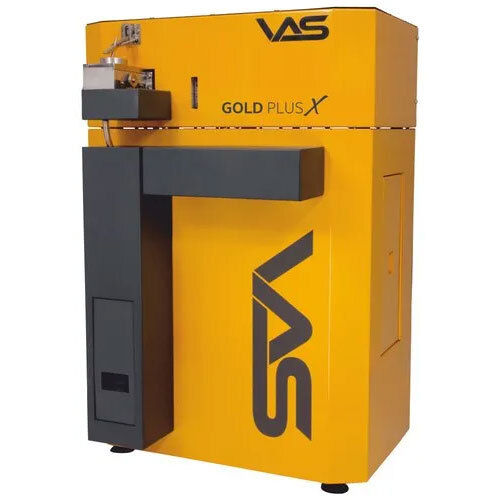
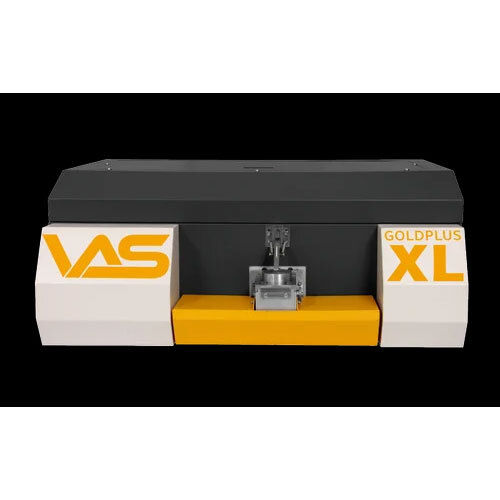
About Portable Optical Emission Spectrometer
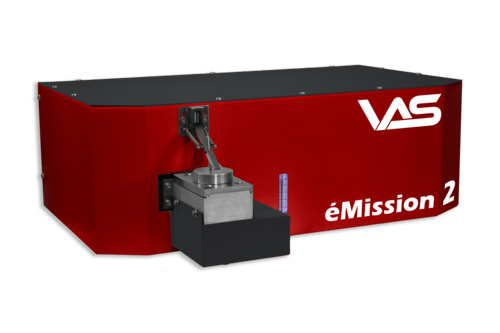
Portable Optical Emission Spectrometer is a compact, handheld version of a traditional optical emission spectrometer, designed for on-site analysis of materials, particularly metals and alloys. These are highly valued for their convenience, speed, and accuracy, enabling users to test the quality and composition of materials without needing to send samples to a laboratory for analysis. They can be used to quickly analyze environmental samples in the field, detecting metal contamination and ensuring compliance with environmental regulations. Portable Optical Emission Spectrometer is an essential tool for industries that require quick, accurate, and on-site material analysis, particularly for metals and alloys.
| Wavelength Range |
410 nm |
| Mobility |
Fixed |
| Brand |
VAS |
| Material |
Mild Steel |
| Voltage |
230 VAC |
| Usage/ Application |
Laboratory |
| Frequency |
50 Hz |
| Operating Temperature |
5 to 37 Deg C |
High-Speed, Accurate Metal Analysis, AnywhereThis portable spectrometer simplifies quality control and alloy identification by providing real-time results in less than 15 seconds. Its suite of features enables reliable analyses both in the laboratory and directly at industrial sites, with fast, dependable performance across a range of sample sizes and types.
Designed for Mobility and DurabilityWeighing approximately 8 kg and protected to IP42 standards, the unit is suitable for challenging environments. Its onboard rechargeable battery, robust design, and dual mounting options (handheld or desktop) empower users to perform continuous measurements without concern about spills or dust.
FAQ's of Portable Optical Emission Spectrometer:
Q: How does the Portable Optical Emission Spectrometer perform metal analysis on-site?
A: The device uses a high voltage spark discharge to excite the metal sample, then detects emitted light across a wavelength range of 170-800 nm using PMT or CCD array detectors. Results are displayed instantly on a LCD graphical screen for immediate analysis.
Q: What types of metals and elements can be measured with this spectrometer?
A: The spectrometer is suitable for both ferrous and non-ferrous metals, and can analyze elements such as Fe, C, Si, Mn, P, S, Cr, Ni, Mo, Cu, Al, Zn, and more with high accuracy and resolution.
Q: When is calibration required for the instrument, and how is it performed?
A: Calibration is necessary before first use, after maintenance, or as recommended by quality protocols. It can be performed using standard samples or certified reference materials (CRM) via the instrument's built-in calibration method.
Q: Where can results be stored and exported from the device?
A: You can store up to 10,000 test results in the spectrometer's internal memory, and export data easily via USB, RS-232, or wireless Bluetooth connections to Windows-compatible management software for further analysis or quality documentation.
Q: What are the sample requirements for the spectrometer to ensure accurate measurements?
A: Samples should have a polished, flat surface and must meet minimum size criteria (10-30 mm or 1010 mm) to guarantee reliable excitation and consistent analytical results.
Q: How does the internal battery and protection level benefit field operations?
A: The internal rechargeable Li-ion battery provides up to 8 hours of continuous operation, making the instrument ideal for long field sessions. With IP42 splash and dust resistance, it remains reliable even in harsh industrial conditions.
Q: What is the typical process for using the spectrometer during metal testing?
A: Prepare the specimen with a polished surface, position it under the probe, and initiate analysis using single or multiple spark modes. The microprocessor-based control manages operation, and results are available in less than 15 seconds for immediate decision-making.






 English
 Spanish
 French
 German
 Italian
 Chinese (Simplified)
 Japanese
 Korean
 Arabic
 Portuguese
 Send Inquiry
 Send Inquiry

