About Optical Emission Spectrometer For Metal Analysis
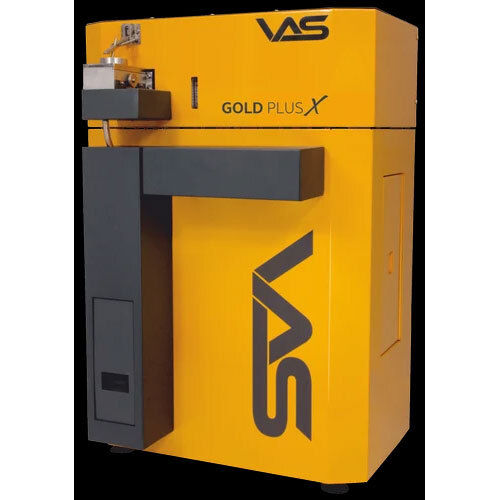
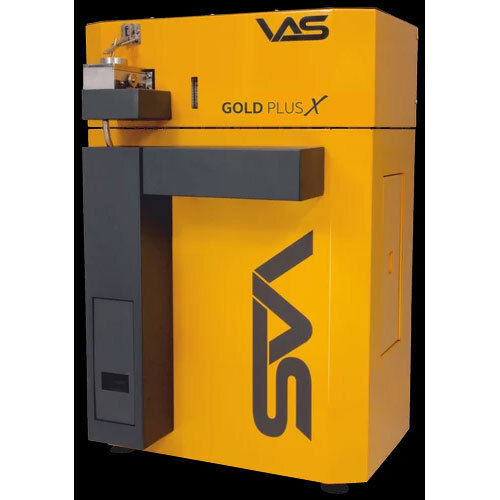
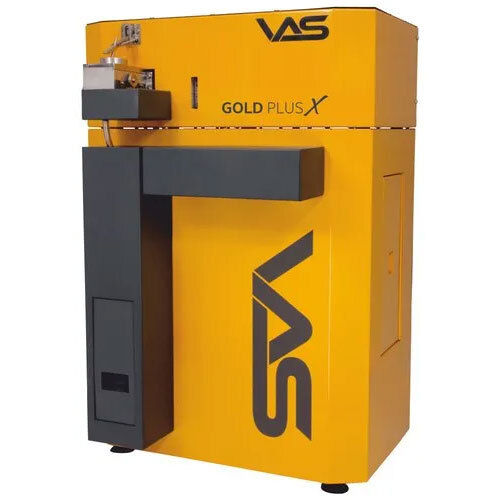
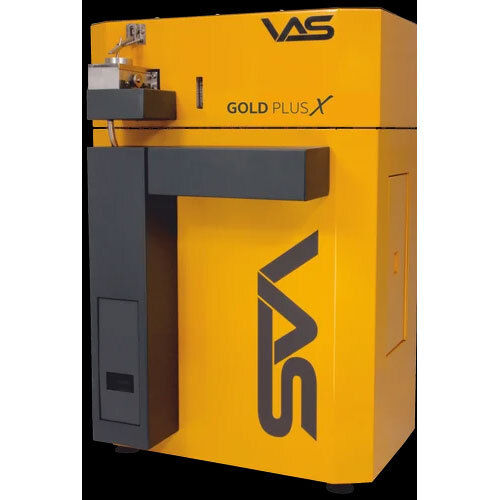
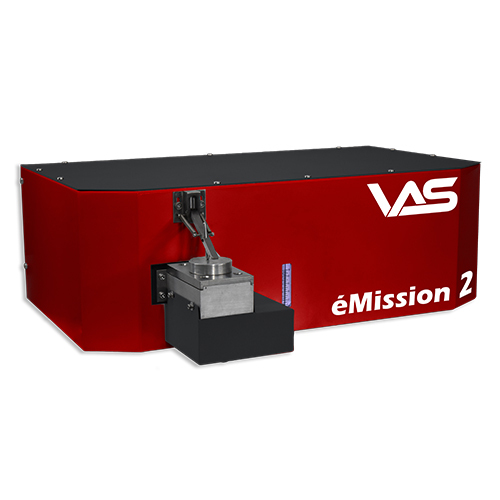
An Optical Emission Spectrometer For Metal Analysis is a specialized instrument used to analyze the chemical composition of metals and alloys. It provides highly accurate results with excellent reproducibility, ensuring that the elemental composition of the metal is measured precisely. This works by exciting atoms in the sample using high-energy discharges (such as sparks or arcs), which causes the atoms to emit light at characteristic wavelengths. One of its major advantages ability is to simultaneously detect and quantify multiple elements in a single measurement. Optical Emission Spectrometer For Metal Analysis is a powerful tool for determining the composition of metals and alloys with high accuracy and sensitivity.
| Mobility |
Benchtop |
| Model Name/Number |
Gold Plus X |
| Weight |
35 kg |
| Voltage |
220V |
| Usage/ Application |
Industry |
Advanced Optical System for High-Precision ResultsUtilizing a Paschen-Runge mount and multi-channel CCD array, the spectrometer achieves remarkable accuracy and resolution, ensuring trace and bulk element analysis. The high-energy spark/arc source maximizes excitation efficiency across a broad spectrum, making it suitable for a variety of metals and alloys, including Fe, Cu, Al, and Ni.
User-Friendly Automation and Data ManagementWith full automatic control, digital LCD display, and an intuitive software interface, users can perform rapid, real-time analysis and calibration. Comprehensive data logging and reporting features facilitate compliance and quality control, while internal and external storage options ensure easy data management.
Optimized for Laboratory Efficiency and SafetyThe integrated fan cooling enables continuous operation without external peripherals, while safety interlocks and over-current protection enhance operational reliability. Its benchtop design occupies minimal space, yet supports up to 30 analyses per hour for single specimens, boosting laboratory throughput.
FAQ's of Optical Emission Spectrometer For Metal Analysis:
Q: How does the Optical Emission Spectrometer ensure accurate metal analysis?
A: The instrument employs a Paschen-Runge mount optical system coupled with a high-sensitivity CCD array to detect elemental wavelengths precisely. Multi-point calibration using certified reference materials and real-time spectrum analysis further enhance its measurement accuracy, typically within 0.01% depending on the element.
Q: What is the process for preparing samples for analysis?
A: Samples should have a flat surface for optimal results. Grinding is recommended to achieve a smooth finish, especially for ensuring consistent spark/arc excitation. The interchangeable sample holder accommodates both conductive and non-conductive specimens with diameters from 10 to 30 mm.
Q: When is external cooling required for operation?
A: External cooling is not needed. The spectrometer features an integrated fan that maintains optimal temperature for continuous testing, eliminating the need for external cooling systems even during high-throughput operation.
Q: Where can data be stored and accessed from this spectrometer?
A: You can store analysis results both internally and externally. Internal storage is complemented by USB/PC interface support, enabling flexible data transfer and report generation for documentation and review.
Q: What are the benefits of using an automatic control and digital interface?
A: Automatic control streamlines analysis, minimising user intervention and reducing errors. The digital LCD with software integration facilitates quick setup, real-time monitoring, efficient calibration, and instant access to spectral libraries and multi-base support.
Q: How safe is the equipment during operation?
A: Safety is ensured by built-in interlocks and over-current protection that prevent improper use and electrical hazards. These features support compliance with laboratory safety standards, providing protection for both users and the equipment.
Q: Can this spectrometer analyse both trace and bulk elements?
A: Yes, the device provides a broad measuring range, enabling analysis from parts-per-million (PPM) concentrations to high-percentage levels, across various metallic elements as per their specific properties.






 English
 Spanish
 French
 German
 Italian
 Chinese (Simplified)
 Japanese
 Korean
 Arabic
 Portuguese
 Send Inquiry
 Send Inquiry

